

 Jamila Musayeva is an international etiquette consultant, author and YouTube educator. She lives in Azerbaijan with her two children, Sevinj and Jamil. Her YouTube channel on etiquette and personal development has more than 1 million subscribers. She speaks six languages and keeps adding new ones.
Jamila graduated summa cum laude from George Washington University with a B.A. in International Relations and double minors in History and Sociology. She earned her M.A. in European Administrative and Political Studies at the College of Europe in Bruges. She is a member of Phi Beta Kappa and the Golden Key Honor Society, and is UK-certified by the International Etiquette and Protocol Academy of London.
Her work has been featured in Forbes, Business Insider, Newsweek, HuffPost, Daily Mail, USA Today, Cosmopolitan and the New York Post. Her favorite piece of advice is simple: “You never get a second chance to make a first impression. Always be ready to make the best of that first time.”
Jamila Musayeva answered Anti Radio’s questions, sharing her journey, her view of etiquette and her daily habits.
The Path to Etiquette
Had she not chosen this path, Jamila believes she would have gone into education, writing or diplomacy. “I have always been interested in human behavior, cultures, and the way people communicate with one another.” Whatever the career, she says, it would have involved learning, sharing knowledge and helping people become better versions of themselves.
Her interest in etiquette grew gradually rather than from a single moment. She was always drawn to the small details that shape our interactions: how we speak and how we make others feel. Over time she realized etiquette was much more than knowing which fork to use. “It was a language of respect, consideration, and self-awareness.”
Early in her career, she met people who saw etiquette as outdated tradition or needless formality. Jamila never tries to win them over with arguments; she shows its value instead. Once people see that etiquette helps them communicate with confidence, build stronger relationships and handle social and professional situations, their view changes. In her words, it is “not about restriction but about freedom and awareness.”



What Etiquette Means Today
According to Jamila, one of the most common mistakes is listening to respond rather than to understand. We are so focused on our own thoughts that we forget to give others our full attention. “Good manners begin with consideration, and sometimes the most elegant thing we can do is simply make another person feel heard.”
Etiquette shapes more than first impressions; it supports long-term success. “First impressions may open doors, but our behavior determines whether those doors remain open.” Talent and knowledge matter, she says, but the way we treat people often determines how far we can go.


Etiquette also evolves with society. Many rules around gender roles have relaxed, and everyday interactions have become less formal. At the same time, the digital world has brought new rules for online communication, social media and respecting people’s privacy.
“Etiquette is not about holding on to outdated rules but about understanding how to treat others with consideration in the world we live in today.”
Personal Growth: Time, Doubt and Habits
Known for her commitment to lifelong learning, Jamila says the most valuable skill she keeps developing is using her time and attention more intentionally. As responsibilities grow, separating what is urgent from what is truly meaningful matters more. “Productivity is not about doing more of everything; it is about directing your energy toward what matters most.”
In moments of self-doubt, she reminds herself that doubt does not mean she is on the wrong path. Sometimes it simply means she is stepping outside her comfort zone. She focuses on what she can control, returns to the work that matters to her and remembers how much she has already learned. “Confidence does not mean never doubting yourself; it means continuing despite those doubts.”

She is most productive when she can start the day without being pulled into other people’s priorities. She uses that quiet time to organize her thoughts, read and plan ahead. The one habit she values most is reading and learning something new every day. “Remaining curious is essential, regardless of how much experience or knowledge we accumulate.”
The Azerbaijani Tea Ceremony
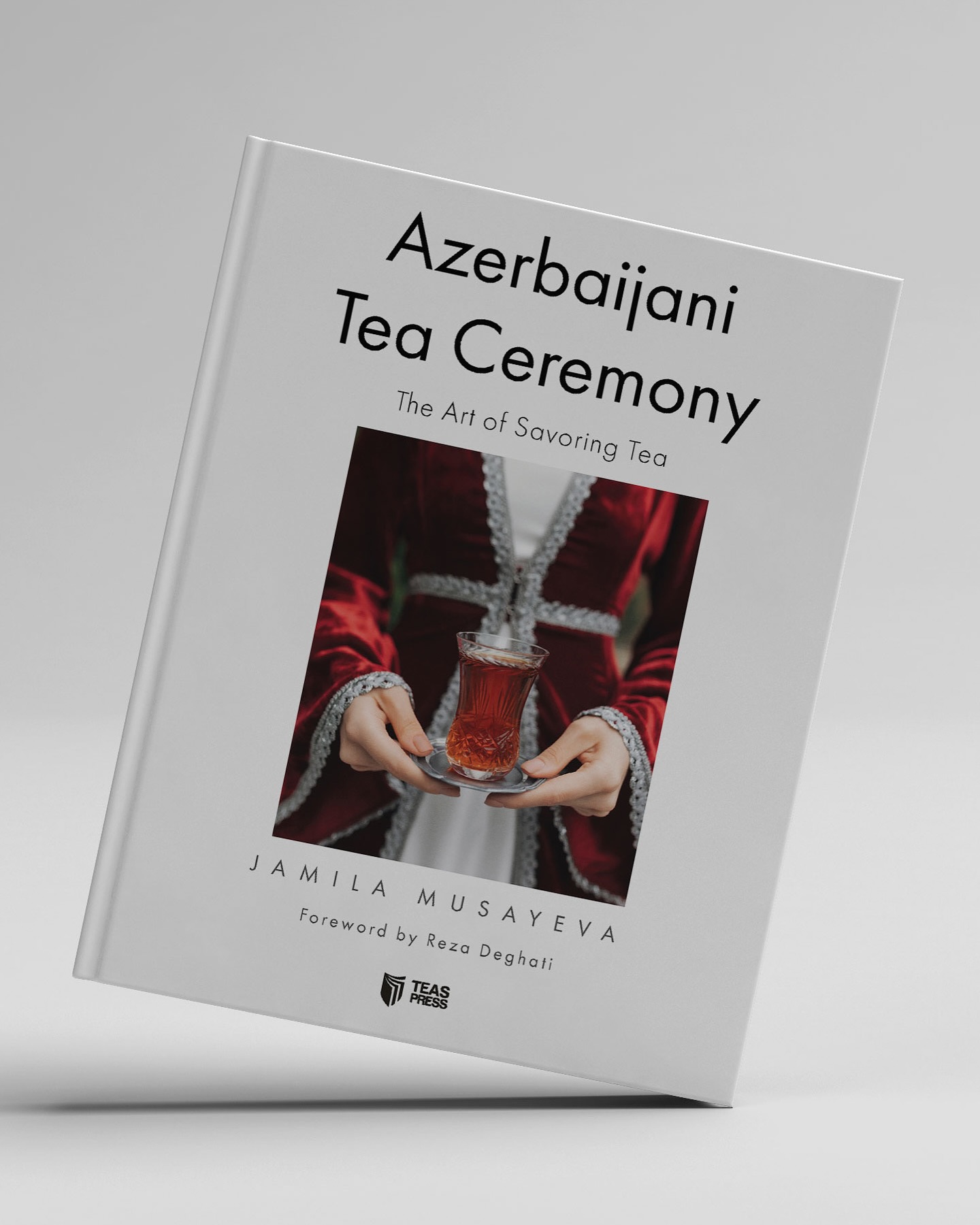
As someone who introduces Azerbaijani culture to an international audience, Jamila is proudest of the country’s tea tradition. “Tea in Azerbaijan is much more than a beverage; it represents hospitality, connection, and the importance of making time for one another.” For her, welcoming someone into your home is not merely about serving them something, but about making them feel that they belong.
She wrote Azerbaijani Tea Ceremony to preserve and share this tradition. “We often take the customs we grow up with for granted, forgetting that they tell the story of who we are and what we value.” The most rewarding feedback comes from international readers who say the book helped them discover Azerbaijan through something as familiar as a cup of tea. Of all her books, it is the one closest to her heart, because it is so deeply tied to her heritage.
Jamila believes Azerbaijan is often seen through a very limited lens, without an understanding of its cultural depth, history and traditions. “We are a country where East meets West, where ancient customs coexist with modern ambitions, and where hospitality is deeply ingrained in everyday life.” She hopes her work helps people see a more nuanced picture of the country.

Books and the Writing Process
Jamila is the author of four books:
- Azerbaijani Tea Ceremony — the history and rituals of Azerbaijani tea culture: the samovar, the armudu glass, and the jams, fruits and nuts served with every cup.
- The Art of Entertaining at Home — the essentials of hosting: choosing gifts, setting a beautiful table, dinner conversation, and how to be a gracious host and guest.
- Afternoon Tea Etiquette — Britain’s famous afternoon tea tradition: its origins, how to take it and what to wear.
- Etiquette: The Least You Need to Know — the core rules everyone needs to make a good first impression.
For Jamila, the hardest part of writing is balancing depth with accessibility. She wants her books to offer real knowledge without overwhelming the reader. “Writing requires not only understanding a subject but also organizing your thoughts, questioning your assumptions, and explaining complex ideas in a way that feels natural and practical.” The process, she says, teaches you as much about yourself as about the subject.
Books and live teaching each have their own strengths. Books let people learn at their own pace, revisit key ideas and reflect privately. Teaching in person creates an immediate human connection: she can read reactions, answer questions and adapt to the people in front of her. “Books provide lasting reference points, while in-person teaching allows for a more personal and interactive experience.”



Languages and Cultures
For Jamila, who speaks six languages, the greatest motivation in learning a new one is the chance to enter a different world. “Language is not simply a collection of words; it reflects how people think, express emotions, understand relationships, and perceive life.” Each new language opens the door to another culture and deeper connections with people. She also loves the moment when something that once seemed impossible becomes familiar.
The most valuable lesson she has drawn from other cultures is that there are many ways to live a meaningful life. Travel teaches you to question your assumptions and see that your own way is not necessarily the only or the best one. “We can learn so much from one another when we approach differences with curiosity rather than judgment.”


Beyond Work
Away from work, Jamila enjoys simple things that help her slow down: reading, spending time with the people she loves, discovering new places and immersing herself in other cultures. She also values moments of solitude. Sometimes, she says, stepping away and simply experiencing life brings the greatest inspiration.
People see the finished work, but they may not realize how much curiosity, discipline and continuous learning go into it. “I do not believe that being an expert means you have all the answers. For me, it means remaining willing to learn, improve, and change your perspective when you discover something new.”
If she could meet her younger self, she would tell her not to be afraid to be seen and not to be afraid to be courageous. Daring to do something different can feel uncomfortable, even frightening, in the moment. “But the reward of taking that risk is so much greater than the comfort of staying small and safe. Do not let the fear of being judged prevent you from becoming everything you are capable of being.”


YouTube and Online Community
Jamila started her YouTube channel to make etiquette accessible to everyone, regardless of where they live or what opportunities they have. Traditionally, etiquette was passed down within families or taught in exclusive settings. YouTube broke those barriers and created a space where anyone could learn. “Seeing how many people around the world have connected with this content has shown me that the desire to learn and improve is universal.”
When choosing topics, she balances her audience’s interests with what she believes matters. She pays attention to the questions people ask, while also considering what will benefit them in the long run. “Sometimes, the most valuable lessons are not necessarily the most obvious or popular ones.” Her goal is content people enjoy watching and take something meaningful from.
Beyond YouTube, Jamila reviews films from an etiquette perspective for her Patreon community, teaches online courses and holds meet-and-greets with followers around the world.



The First Step: Self-Awareness
For anyone who has just discovered her work and wants to grow, Jamila’s first recommendation is self-awareness. Before trying to change everything, take time to understand your habits, strengths, weaknesses and the way you affect the people around you. Then choose one area to improve and work on it consistently.
“Personal development is not about becoming someone else; it is about becoming a more thoughtful, capable, and conscious version of yourself.”
Our Impressions
Talking with Jamila Musayeva left a truly warm impression on us. Jamila is like a good book: the more you talk with her, the more pages you turn and the more you discover. Knowledge, elegance and humility come together in her naturally.
We sincerely thank Jamila for answering our questions with such openness and care, and we wish her every success with her new books, her projects and all her future work!